 Tax Planning
Quarterly estimated taxes: who owes them, how much, and when
If you earn income that is not subject to withholding, the IRS expects you to pay as you go. Here is how to know if that is you, and how to avoid the penalty.
Quick answer
You generally owe quarterly estimated taxes if you expect to owe at least $1,000 in tax for the year after withholding, which applies to most self-employed people, freelancers, business owners, landlords, and investors. For 2026 the federal due dates are April 15, June 15, September 15, and January 15 (2027). The safest way to avoid an underpayment penalty is to pay either 90% of this year’s tax or 100% of last year’s (110% if your prior-year income was over $150,000).
The U.S. tax system is “pay as you go.” Employees do this automatically through paycheck withholding. If you earn income with no withholding, self-employment, business profit, rental income, large investment gains, the IRS expects you to send in tax four times a year instead. Miss it, and the penalty is essentially interest on what you should have paid.
Do you actually owe estimated taxes?
The trigger is simple: if you expect to owe $1,000 or more in federal tax for the year after subtracting any withholding and credits, you are generally required to make estimated payments. That captures most:
- Self-employed people and independent contractors (1099 income).
- Owners of pass-through businesses (sole props, partnerships, S-corps).
- Landlords and real-estate investors.
- Anyone with significant investment, dividend, or capital-gains income.
- People with a side business on top of a W-2 job, if withholding does not cover the extra.
The 2026 federal due dates
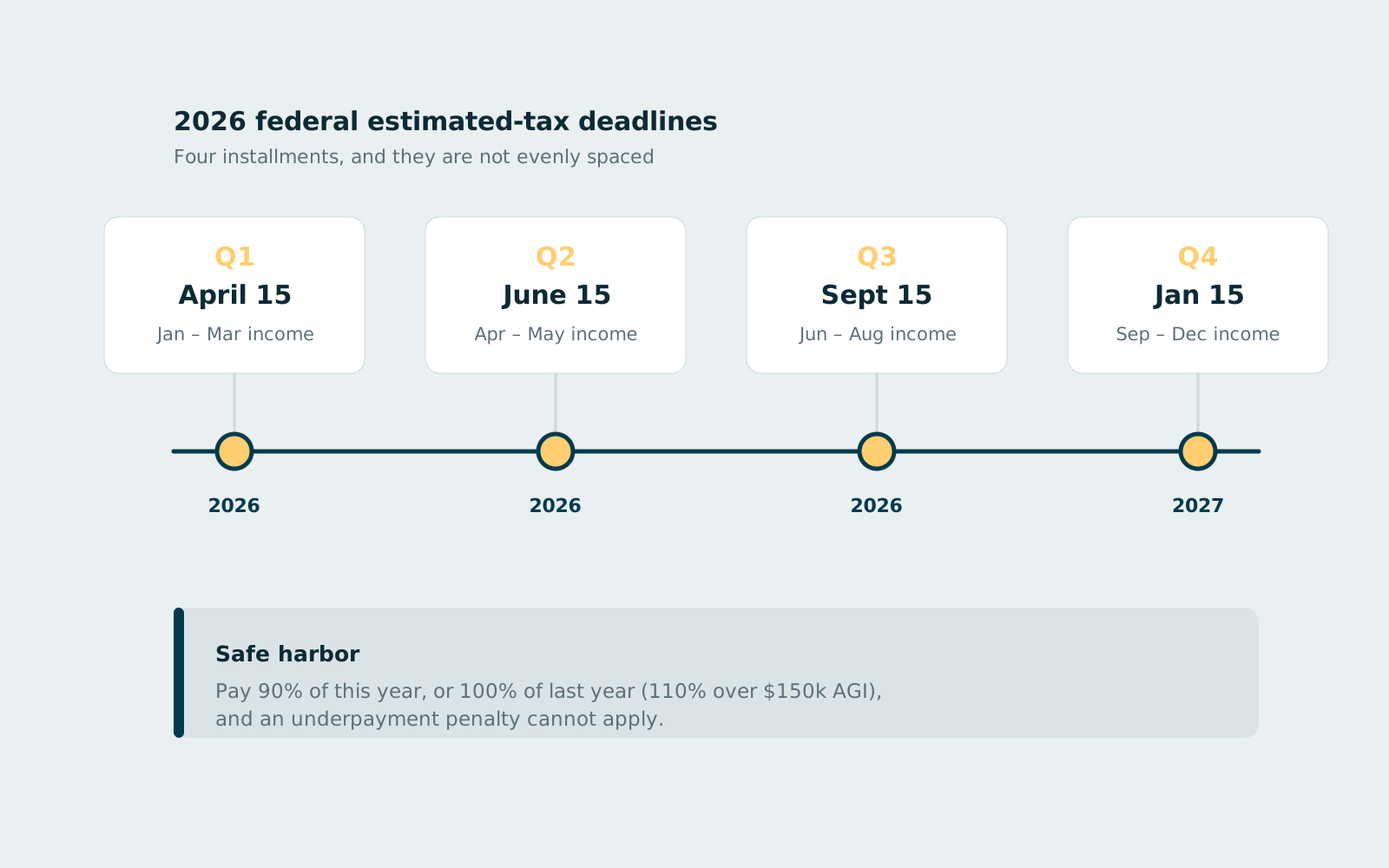
Estimated taxes are due in four installments. Note that they are not evenly spaced, a common source of missed payments:
- Q1 (Jan–Mar income): due April 15, 2026.
- Q2 (Apr–May income): due June 15, 2026.
- Q3 (Jun–Aug income): due September 15, 2026.
- Q4 (Sep–Dec income): due January 15, 2027.
Michigan and many cities (including Detroit) have their own estimated-payment requirements and dates, which often mirror the federal schedule but not always. State and local obligations are easy to overlook when you are focused on the IRS.
How much should you pay? The safe-harbor rule
You do not have to predict your income perfectly. The IRS offers a safe harbor: you will not be penalized if you pay, through withholding and estimates, at least the smaller of ,
- 90% of your current-year tax, or
- 100% of last year’s tax (110% if your prior-year adjusted gross income was over $150,000).
For most people, paying 100%/110% of last year’s tax in four equal installments is the simplest way to stay penalty-free, even if you have a big year. We typically calculate this for clients at the start of the year so the payments are set and automatic.
The penalty is not a fine for guessing wrong, it is interest for paying late. Hit a safe harbor and the guessing stops mattering.
Want this applied to your numbers?Book a free 30-minute advisory review with a senior member of our team.
Book a review How to actually pay
Federal payments are easiest through IRS Direct Pay or the EFTPS system online; you can also mail Form 1040-ES vouchers. Keep a record of every payment, mismatched estimates are a frequent cause of notices. If your income is uneven through the year, the “annualized income” method can lower early-quarter payments, though it adds paperwork.
Frequently asked questions
What happens if I miss a quarterly payment?
The IRS charges an underpayment penalty, which functions like interest on the amount and time you were short. Catching up on a later quarter reduces but does not fully erase it, the penalty is calculated per period.
I have a W-2 job and a side business, do I still need estimates?
Maybe not. You can often increase the withholding on your W-2 job to cover the side-business tax, which avoids quarterly payments entirely. We frequently set clients up this way because withholding is treated as paid evenly across the year.
Can OMNEX calculate and remind me?
Yes. For ongoing clients we calculate safe-harbor estimates at the start of the year and send reminders before each due date, so nothing slips. It is part of the year-round relationship, not a once-a-year scramble.
Key takeaways
- You likely owe estimates if you expect $1,000+ of tax after withholding.
- 2026 federal dates: Apr 15, Jun 15, Sep 15, and Jan 15, 2027, not evenly spaced.
- Hit a safe harbor (90% this year / 100–110% last year) to avoid penalties.
- Don’t forget Michigan and city estimates; W-2 withholding can sometimes replace estimates.
Due dates and thresholds reflect 2026 federal rules and can change. Verify current figures or ask us before relying on them.